
Before Everything Else, There Was Play.
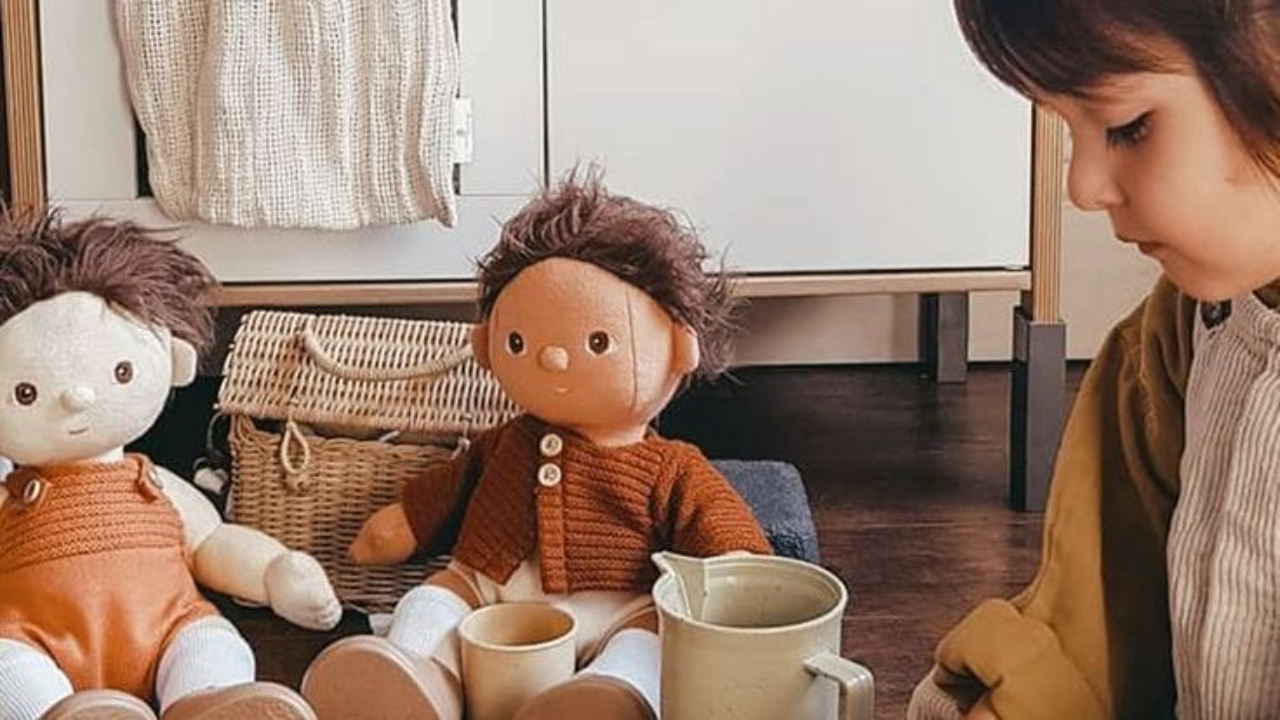
I want to tell you something that changed the way I see children completely.
Not a script. Not a strategy. Not a framework I learned in a textbook, although the research does back this up entirely. It's something much simpler than that. Something that was happening long before any of us had words for it.
- Before your child knew how to regulate their emotions, they played.
- Before they understood boundaries, relationships, empathy, or how to recover from a hard moment, they played.
- Before behaviour became something you were trying to manage, before the meltdowns felt personal, before parenting started to feel like a problem you couldn't solve, your child was already doing the one thing that would have helped with all of it.
They were playing. And they were waiting for you to join them.
I became a play therapist because I watched play do things nothing else could.
I've sat with children who couldn't find words for what they were carrying. Children who were shutting down, acting out, pushing everyone away. Children whose behaviour made perfect sense once you understood what was happening underneath it and made no sense at all if you were only looking at the surface.
And I watched play reach them. Every time.
Not because play is magic. But because play is the natural language of childhood. It is how children make sense of the world, process the hard things, practise being human and stay connected to the people they love. It is not supplementary to development. It is development.
This is what I want every parent to understand before they try another reward chart, another consequence, another script they found on the internet at midnight.
Play is not the nice thing you do after the real work is done. Play is the real work.
What play actually builds
When I talk about play as the foundation, I mean it literally. Here is what is happening underneath every play experience your child has.
When your child plays, they are building emotional regulation. They are learning to tolerate frustration, manage disappointment and recover from rupture all in a context that feels safe enough to practise in.
When your child plays, they are building resilience. Not the kind you teach them about in a conversation, but the kind that gets wired into their nervous system through repeated experience. Through trying, failing, adjusting and trying again inside the container of play where the stakes feel low enough to keep going.
When your child plays, they are building self-awareness. They are discovering who they are, what they feel, what they need and how to communicate it. Play is where identity forms.
When your child plays, they are building connection. With you, with other children, with themselves. The research on secure attachment is clear: children who play with their caregivers develop stronger, more trusting relationships. Not because of what is said during play, but because of what is felt.
When your child plays, they are building capacity. The capacity to learn, to focus, to sit with discomfort, to be curious, to be brave. Everything we want for them in a classroom, in a friendship, in a life, it starts here.
And here is the thing about all of this: you cannot shortcut it. You cannot replace it with a consequence system or a calm down corner or a behaviour chart, no matter how evidence-based the packaging says it is. Those things might manage the surface. Play changes the foundation.
Why behaviour is not the problem
Most parents come to me because of behaviour. The meltdowns. The defiance. The aggression or the shutdown or the anxiety that makes every morning a negotiation.
And I understand why. Behaviour is loud. Behaviour is exhausting. Behaviour is the thing that makes you question yourself at the end of a long day.
But behaviour is never the problem. Behaviour is always the communication.
Its true what they say: Your child is not giving you a hard time, they are having one. And they are showing you, in the only language available to them, that something underneath needs attention.
Play gets underneath. Every time.
When a child feels genuinely connected to their caregiver through play, their nervous system settles. When their nervous system settles, the behaviour shifts. Not because you managed it into submission, but because the root cause was addressed. Because connection was restored. Because they felt safe enough to regulate.
This is what the research shows, consistently, across decades of developmental science and play therapy practice. And it is what I have watched happen in my own clinical work, over and over again.
Play is not a distraction from the real solution. It is the real solution.
What this means for you
You do not need to overhaul your entire parenting approach overnight. You do not need to throw away everything you have tried or feel guilty about the strategies you have leaned on when you were exhausted and out of options.
You just need to understand one thing: play is the foundation. Everything else builds on top of it.
When you prioritise play (real, connected, child-led play) you are not being passive. You are doing the most active, powerful thing available to you as a parent. You are speaking your child's language. You are meeting them where they actually live.
And when you do that consistently, something starts to shift. The mornings get easier. The transitions get softer. The meltdowns lose some of their intensity. Not because you found the right consequence, but because your child feels seen, safe, and connected. Because play gave them that.
This is what I have built my entire career on. And this is where I want to start with you right here, at the foundation.
Because before the behaviour strategies, before the parenting scripts, before everything else you have tried, there was play.
And it is still waiting for you.